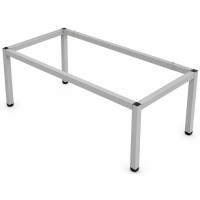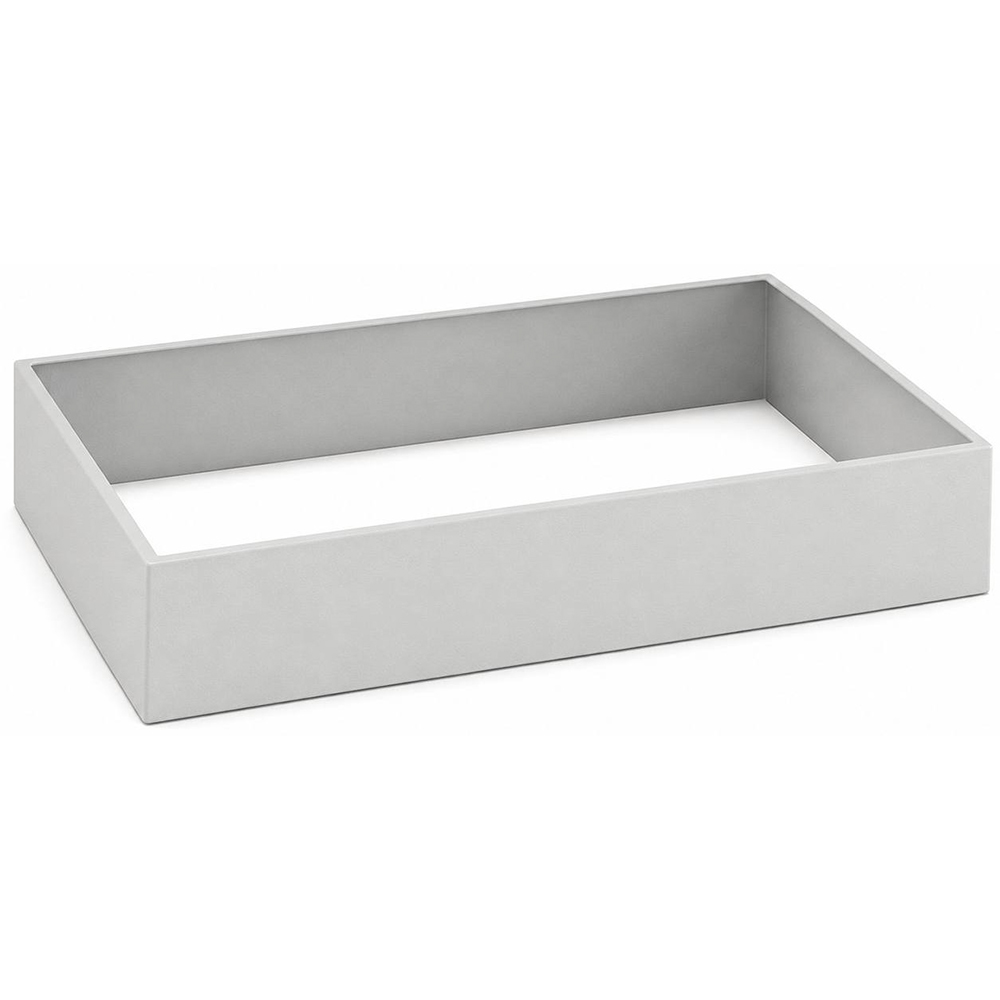
A plinth is an accessory component for metal cabinets that protects the lower part of the structure and enhances its appearance.
Purpose:
protecting the lower part of the cabinet from mechanical damage, moisture, and dirt;
concealing floor unevenness and compensating for minor level variations during installation;
creating an aesthetically finished look for the cabinet, visually separating the body from the floor;
ensuring natural ventilation of the space beneath the cabinet (if perforated or with gaps).
Key specifications:
dimensions:
height — 150 mm;
width — 300 - 1200 mm;
depth — 500 mm;
material: sheet steel, galvanised or with anti‑corrosion coating;
pre‑treatment: before painting, the metal undergoes phosphating — this creates a thin protective layer on the surface, improving paint adhesion and enhancing the product’s corrosion resistance;
coating: powder paint (typically in standard colour — RAL 7035 grey, or another colour upon customer’s request), resistant to scratches and household chemicals;
design: U‑shaped profile (trough‑like) with mounting holes for attaching to the cabinet frame;
installation type: removable. The "protrusion‑slot" mounting system makes mounting the base on the cabinet quick and convenient. No bolts, tools, or complicated manipulations.
Advantages:
increases the rigidity of the cabinet structure thanks to the additional horizontal element;
protects the floor from scratches when moving the cabinet;
hides adjustable supports (if provided), giving the cabinet a neater appearance;
easy to clean with a damp cloth;
resistant to corrosion and wear due to phosphating and powder coating;
compatible with most standard metal cabinets (cellular, archive, tool, wardrobe, etc.).
Installation:
Before installation, it is recommended to check the floor level and, if necessary, adjust the cabinet supports to ensure even contact of the plinth.
| Characteristics | |
| Height, mm | 150 |
| Width, mm | 300, 400, 500, 600, 800, 900, 1200 |
| Depth, mm | 500 |